

Sardis was the capital city of Lydia, and it was founded about 1200 BC. The city itself was located fifteen hundred feet up in the air on a ledge of rock jutting out of the side of a mountain.
There was one narrow road leading into the city; the other sides of the plateau were just steep cliffs, which made the city very safe and nearly impenetrable to invading armies.
Gold and silver coins were first minted there, and it was famous for the industries that operated there. Carpet, wool, and dyed cloth were their primary products, and it is said that the art of dyeing material was invented at Sardis. The fall of Sardis began when the people of the city became complacent in their wealth, their power and their city’s apparent invincibility.
The city was proud of its past, and it was proud of its reputation, but its reputation was all it had left. For all intents and purposes, the city of Sardis was dead, even while it lived. Sardis today is a wilderness of ruins and thorns, where the only habitations are a few huts of the Yurok nomads.
We know nothing at all about how the church in Sardis started. As we go through Jesus’ letter to the church in Sardis, you will find that He has no words of commendation for them, but He does have some words of condemnation and counsel.
John begins by reminding us that Jesus is the One ‘who holds the seven spirits of God and the seven stars,’ Revelation 3:1 / Revelation 1:16. What does that mean? Well, the good news is we don’t need to speculate because the best interpretation of the Bible is the Bible itself.
John tells us that ‘seven spirits’ are equated with ‘seven eyes,’ Revelation 2:20 / Revelation 5:6. This clearly means that Jesus has all-seeing power and also implies He has all wisdom.
Barnes, in his commentary, says the following.
‘If the phrase, “the seven Spirits of God,” as they are supposed, refers to the Holy Spirit, there is great propriety in saying of the Saviour, that he has that Spirit, inasmuch as the Holy Spirit is represented as sent forth by him into the world, John 15:26-27 / John 16:7 / John 16:13-14.’
The number ‘seven’ would, of course, indicate ‘fullness’ or ‘completeness’, but it may also be used to speak of the total knowledge concerning the ‘seven’ churches. In other words, as we have seen in all the other letters, Jesus sees all and understands everything.
And this isn’t anything new; way back in the days of Zechariah, we find the same idea, Zechariah 3:9 / Zechariah 4:10. It looked to some as though the temple, which had begun its building work about sixteen years previously, would never be completed.
And so, God assembles the people and has a top stone set before Zerubbabel according to Zechariah 4:7, and He then swears that Zerubbabel, who started it, will finish it. Engraved on the stone are seven eyes, Zechariah 3:9. But whose eyes are they? God’s eyes.
God is challenging the people to look at this top stone; they couldn’t see the completion of the temple, but God’s eyes could see the completion because He is greater in knowledge and wisdom. His eyes could see all the obstacles which needed to be removed, the things which must be taken care of, for the job to be finished, 2 Chronicles 16:9.
The ‘seven spirits’, which are equivalent to the ‘seven eyes’, speak of the total wisdom and insight which comes from the Spirit. Remember that each letter ends with the words “Whoever has ears, let them hear what the Spirit says to the churches,” Revelation 2:7 / Revelation 2:11 / Revelation 2:17 / Revelation 2:29 / Revelation 3:6 / Revelation 3:13 / Revelation 3:22.
In other words, no matter what appearances might say, Jesus knows and sees the reality. Jesus says He knows every individual and every congregation as they really are. In fact, Jesus tells the church in Sardis, “I know your deeds; you have a reputation of being alive, but you are dead,” Revelation 3:1.
This was a church which worked, and much like we do today, they probably broke bread every first day of the week and contributed of their means. Jesus says to the church in Sardis, ‘You have the reputation of being alive, but the fact is, you are actually dead’. The church in Sardis outwardly looked great, but inwardly, they were rotting away.
We know that the city of Sardis was ‘alive’ during times of strife and war, but it couldn’t live in peace. The church in Sardis had not been at war with Rome, and it wasn’t having any trouble with the prominent group of Cybellian worshipers who lived there. There are no records of slanderous Jews attacking the church. In her peace, she seems to have drifted into a coma and then on into death.
This congregation was living on its past reputation without any present achievements. They used to be heavily involved in mission work, but they are doing nothing except glorying in the past.
Jesus isn’t so concerned about the things they used to do as a church, but He is very concerned about the things they are doing or not doing today as a church. We can’t live in the past, and the church can’t live on its past reputation.
Here is a church that started lots of things but finished none; here is a church that promises so much, but delivers so little. In other words, they were great starters but terrible finishers, Revelation 3:2. The church in Sardis had no excuse for not completing what it started out to do.
They weren’t under attack from within or from outside the church. There’s no indication that there were people arguing over the Deity of Jesus; there’s no indication of legalism.
In other words, they were just lazy, and they were content with a second-hand faith, 2 Timothy 3:5. Jesus says the church in Sardis stood for nothing and had fallen from everything.
They were not dying, but they were dead as a church; some individuals were still alive but on their way to dying, Revelation 3:2, as we will see in a moment. Being ungrateful was somewhat characteristic of a Sardinian, and the citizens of that city had changed the church into having the same character.
Some of the Christians were in the world, but sadly, of the world, John 17:14-16. They had developed an attitude of laziness and just didn’t care anymore for themselves or those around them.
They simply didn’t care for their own Christian life, Romans 13:11. They simply didn’t stand firm in the faith, 1 Corinthians 16:13. They simply didn’t resist the devil and flee from him, 1 Peter 5:8. They simply didn’t watch and wait, 1 Thessalonians 5:6.
They were barely alive and ready to die, Revelation 3:2, but they were spiritually dead. And so, each member had to repent in their hearts and show that repentance in their attitude by actually finishing the things they had started, Revelation 3:2.
Notice Jesus says, ‘my God’, Revelation 3:2 / Revelation 3:12 / Revelation 1:6. We must remember that Jesus is God, but the reference here alludes to Jesus’ humanity.
The Father became Jesus’ God when Jesus was in Mary’s womb, Psalm 22:10, and since Jesus was human, we know that God is the God of all flesh, Jeremiah 32:27. Hence, when He speaks to Mary, he tells her to go and tell His disciples, ‘I am ascending to My Father and your Father, and My God and your God,’ John 20:17.
Remember also that Jesus ascended back to the Father in His new glorious body, which was also physical, Mark 16:19 / Luke 24:50-52 / Acts 1:9-11. In other words, in heaven Jesus still has His humanity; hence why He calls the Father ‘my God’, Revelation 3:2.
If they don’t wake up and repent, then there will be consequences. He would come like a thief in the night, Revelation 3:3. We all know that most thieves work at night, and they never come at a time when we expect them to.
As Christians, we should be familiar with the words of Jesus here, Revelation 3:3 / Revelation 16:15 / Matthew 24:43, as this illustration of ‘a thief in the night’ is used a lot throughout the New Testament, 1 Thessalonians 5:1-4.
Barnes, in his commentary, says the following.
‘Every man who is warned of the evil of his course, and who refuses or neglects to repent, has reason to believe that God will come suddenly in his wrath, and call him to his bar, Proverbs 29:1. No such man can presume on impunity; no one who is warned of his guilt and danger can feel that he is for one moment safe. No one can have any basis of calculation that he will be spared; no one can flatter himself with any probable anticipation that he will have time to repent when God comes to take him away.’
There were some Christians in the Sardis church who were faithful, and that’s who Jesus is going to address next.
Notice that Jesus makes the distinction between the individual Christian and the congregation, Revelation 3:4. They had become an ungrateful church, and they had forgotten all that God had done for them, Hebrews 2:1.
The church did start to drift away because they didn’t pay attention to what they had heard, but there were a few Christians who remained firm, and they were the ones who didn’t soil their clothes, Revelation 3:4 / Jude 23. In other words, they didn’t allow anyone or anything to kill the strength and blessings of being a Christian.
It is possible for a Christian to live among sinners and not be affected by their evil. Jesus says that the faithful in Sardis ‘will walk with Him’, Revelation 3:4. This is an allusion to Enoch, Genesis 5:22-24.
In other words, Enoch lived during that time of evil before the flood, when no one listened to or trusted God, but he did. He was surrounded by evil, but he continued to stay close to God.
Jesus says to the faithful in Sardis, despite all the evil influences around them, despite all the un-Christ-like behaviour among some of their own members. The faithful few in Sardis will walk faithfully with God, and they have remained true to their faith, which was reflected not only in their talk but also in their walk, Revelation 3:4. And they are so worthy, not because they earned that worthiness but because their conduct reflected their Christian faith.
Notice also that they are dressed in white, Revelation 3:4. The colour white in this text represents purity and victory in the presence of God, Revelation 7:9. This text is symbolic of the Feast of Tabernacles, which was the most joyful of all Jewish feasts.
It followed the harvest of the crops and the ingathering of the grapes, and it followed the great Day of Atonement when the sins of the nation were removed. And at that one moment, they were pure and victorious in God’s eyes, being right with God again. What a wonderful day that must have been.
Look how personal this is. Jesus knows each of them intimately, even to the point of knowing their names, Revelation 3:5. In this world, we’re nothing more than a national insurance number or a reference number.
But Jesus, He knows my name, and He knows your name. He will never blot out our names from the Book of Life: Revelation 3:5 / Revelation 13:8 / Revelation 20:12 / Exodus 32:32 / Luke 10:20 / Philippians 4:3.
We must note that there is a difference between the Book of Life and the other books. They are not the same book but two separate books. The Book of Life contains the names of the redeemed and those who belong to God, Revelation 3:5 / Revelation 13:8 / Revelation 21:27 / Philippians 4:3.
Those whose names are not found in the Book of Life will end up in hell, Revelation 17:8 / Revelation 20:15. The other books contain the records of the specific earthly deeds, choices, and works of every individual, whether good or bad, Daniel 7:10 / Revelation 20:12.
Barnes, in his commentary, says the following.
‘The book which contains the names of those who are to live with him forever. The names of his people are thus represented as enrolled in a book which he keeps, a register of those who are to live forever. The phrase “book of life” frequently occurs in the Bible, representing this idea: Philippians 4:3 / Revelation 15:3 / Revelation 20:12 / Revelation 20:15 / Revelation 21:27 / Revelation 22:19. The expression “I will not blot out” means that the names would be found there on the great day of final account, and would be found there forever.’
Clarke, in his commentary, says the following.
‘In all this there may also be an allusion to the custom of registering citizens. Their names were entered into books, according to their condition, tribes, family, and when they were dead, or had by unconstitutional acts forfeited their right of citizenship, the name was blotted out, or erased from the registers, Exodus 32:32.’
He says He would be proud to name His faithful ones as His own before the Father and His angels, Revelation 3:5 / Matthew 10:32. People can wear and use the Name of Jesus for all sorts of reasons, but they still might not be known to Jesus. The ones who are known to Jesus are the ones who do the will of the Father, Matthew 7:21-23.
Jesus didn’t ask the faithful in Sardis to get up and move; He encouraged them to stay, Revelation 2:7. Paul says the stronger brethren are supposed to bear the burdens of the weaker brethren, not move away, Romans 14:1 / Galatians 6:2.
Even if the congregation is being exposed to false teaching, what are the faithful supposed to do? Get up and leave? Paul says it is the evil leaven, which is to be removed, not the leavening influence of the faithful few, which is to be removed, 1 Corinthians 5:6-7.
Are we listening? Revelation 3:6. Are we awake and walking with Jesus victoriously in all purity? Jesus knows our ways and thoughts. Jesus is very much alive, and if any church claims to belong to Him, then they too need to ensure that they stay alive.
As we go through this letter written by Jesus to the church in Philadelphia, Revelation 3:7, we will see that the church is praised by Jesus, not for its numerical strength, but for its faithfulness, even though it’s weak.
The word ‘Philadelphia’ is the Greek word for ‘one who loves his brother’. The city was named for Attalus II, whose love for his brother Eumenes earned him the name Philadelphos. The city itself was situated at the border of Misia, Lydia and Phrygia but was not a garrison city.
It was located on the Calamus River about one hundred and five miles from Smyrna, and it was founded with the deliberate intention of being a missionary city of Greek culture and language to Lydia and Phrygia, and it had a successful missionary spirit. Its rich and fertile volcanic soil made it a grape-growing and wine-making centre, and it was subject to frequent earthquakes and daily tremors.
It was a city with many names of gratitude, for example, ‘New Caesarea’, which means ‘city of Caesar’. They named it ‘New Caesarea’ out of gratitude for Tiberius, who restored the city after the earthquake of 17 AD.
Another example is ‘Vespasian Philadelphia’ or ‘Flavia Philadelphia’. The people understood what it meant to receive a new name, as it was in relation to the emperor who was reigning at the time.
Philadelphia became and remained a wealthy city and an important trade centre as the coastal cities declined. It grew in a spirit of persistence against overwhelming odds, and it had many magnificent temples and other public buildings.
As we’ve seen with most of these letters, we have no record of how the church was established or by whom. Of the seven letters to the seven churches found here in Revelation, only two didn’t receive any sort of correction or rebuke. One was the church in Smyrna, Revelation 2:8-11, and the other is this church, the church in Philadelphia.
While the letter to the church in Smyrna is a challenge for them to remain faithful unto death, this letter is filled with compliments and praise. The other five letters all contained words of complaint and correction, but this church receives nothing but praise from the Lord. And as we go through this letter, we become quickly aware that this is a church that the Lord is using for His glory.
There is no doubt that Jesus has His Jewish enemies on His mind when He writes this letter, as He says, ‘He is holy, and He is true’, Revelation 3:7. The Jews claimed to be a holy nation; they were set apart for holy service to God, Exodus 19:6.
But as we know from reading through the Bible, we can clearly see that the claim had only an appearance but no substance. Jesus was the sanctified One, and His claim had substance, Hebrews 4:15. The word ‘true’, Revelation 3:7, means ‘genuine, the substantial reality.’
Barnes, in his commentary, says the following.
‘He that is true is another characteristic of the Saviour well suited to be referred to when he addresses people. It is a characteristic often ascribed to him in the New Testament, John 1:9 / John 1:14 / John 1:17 / John 8:40 / John 8:45 / John 14:6 / John 18:37 / 1 John 5:20, and one which is eminently adapted to impress the mind with solemn thought in view of the fact that he is to pronounce on our character, and to determine our destiny.’
Sometimes the Bible uses the illustration of a shadow, and it is always associated with the Jewish religion, Colossians 2:16-17. Jesus truly is the Holy One in every sense of the word, and He is also the real deal.
Notice what Jesus is holding: He is ‘holding the key of David’, Revelation 3:7 / Isaiah 22:22. And what are keys used for? Opening and closing things. That’s why He says, “What he opens no one can shut, and what he shuts no one can open,” Revelation 3:7-8.
To most people, this is no big deal, but to the Jew, this was a rebuke. Because this is about holding the key of power and authority, Jesus says, ‘He has this power and authority’.
But what authority is He talking about? Some people like to believe He’s referring to the authority over the treasury, which I will explain in a moment. But the authority here under consideration is a whole lot more than a city treasurer.
In Isaiah 22:15-25, we read that Shebna was treasurer and governor, Isaiah 22:15. And when we read on, we read that his authority was to be taken from him and given to someone else, Isaiah 22:20-22.
Is there any doubt in your mind that Revelation 3:7 alludes to Isaiah 22:22? Eliakim was to be put over the ‘house of David,’ Isaiah 9:6-7. And in Isaiah 36:3, we read of the removed Shebna as being a scribe and Eliakim as being ‘over the household.’ He basically represented the city against the invader.
The key was the symbol of power and authority, and not only does Jesus have the key, but He also has the power to use the key, Revelation 3:7-8 / Matthew 28:18-19. In other words, Jesus holds the key to life and death, Revelation 1:18, and some Jews couldn’t or wouldn’t accept that.
Or to put the point across more simply, Jesus, in claiming to be the promised Messiah, also claims the right of inclusion and exclusion. He had let the Philadelphians in; he had opened the door, and not all the Jews under heaven could close it.
No matter how hard they tried, all their slandering and mockery made no difference. The open door is the door to blessing, but notice that Jesus is also a shutter of doors, Revelation 3:7. To enter the presence of God means going through Jesus, and there is no other way, John 14:6.
There can be no entrance into the presence and blessing of God except through Jesus. And so, despite all their slandering, the door to blessing was closed against the Jews.
Despite all their cries of, ‘we’re descendants of Abraham!’ John 8:33-35. Despite all their ritual keeping, despite all their claims to history, their law and their prophets, the door was firmly shut, Luke 11:52. The door of blessings was shut by the One who has the key of the house of David, Revelation 3:7.
Time and time again, we have seen that Jesus knows everything, Revelation 3:8 / Proverbs 15:3. And Jesus sees and knows everything which is happening in this world. The open door here is a door of service, and notice that they haven’t provided it, but God has, Revelation 3:8.
The idea is that of access or ability to enter the kingdom of God, eternal, or to take advantage of opportunities. The opportunity is provided by the Lord, but we as Christians must take advantage of it, 1 Corinthians 16:9 / 2 Corinthians 2:12 / Colossians 4:2-3.
An open door could be a large opportunity to share the Gospel with hundreds of people or even a nation. But an open door can also come in the form of a simple chat with a workmate or a friend. Or by chatting with someone on the bus or in a queue in a shop.
God can open a door by helping others out in times of trouble or by providing food for those who really need it. According to our text, when God opens a door, no one can shut it, Revelation 3:8.
This means that no external power, no resources, no excessive wealth, no military forces, and no heavenly bodies can shut what Jesus opens. Jesus has the power and authority, and He says to the church in Philadelphia, “I know that you have little strength,” Revelation 3:8. In other words, they were weak in influence and had no political sway.
Many scholars believe that this was speaking about the size of this church, a small church with limited resources and few workers. But what they probably saw as weakness, the Lord saw as strength, Romans 8:31-32 / 2 Corinthians 12:10.
The Lord saw their little strength but said, I am going to bless you with open doors because “you have kept my word and have not denied my name,” Revelation 3:8.
Barnes, in his commentary, says the following.
‘When Christians were brought before pagan magistrates in times of persecution, they were required to renounce the name of Christ, and to disown him in a public manner. It is possible that, amidst the persecutions that raged in the early times, the members of the church at Philadelphia had been summoned to such a trial, and they had stood the trial firmly. It would seem from the following verse, Revelation 3:9, that the efforts which had been made to induce them to renounce the name of Christ had been made by those who professed to be Jews, though they evinced the spirit of Satan. If so, then the attempt was probably to convince them that Jesus was not the Christ. This attempt would be made in all places where there were Jews.’
Remember, this part of the country was prone to earthquakes, and so they are going to have opportunities to do mission work not only in their own area but also in the regions beyond because of their faithfulness. And so, this church is going to be greatly blessed, but there are others who won’t be blessed.
There were some Jews who were a part of the synagogue of Satan pretending to be Jews who were a part of the synagogue of God, Revelation 3:9 / Revelation 2:9. Even today, there are many Jews who need to know about their spiritual state, Revelation 3:9. They are lost, undone, Christ-less and therefore priest-less, and so in effect they are hopeless, because apart from Jesus there is no hope.
The real Jew is a physical descendant of Abraham through Jacob who has given his life to Christ. If he hasn’t done that, he is no Jew, and that’s not me saying that; it’s the apostle Paul, Romans 2:28-29 / Romans 9:6-7. They can claim to be Jews all they want, but if they haven’t given their lives to Jesus, they are not real Jews.
And it’s to these Jews that Jesus says, “I will make them come and fall down at your feet and acknowledge that I have loved you,” Revelation 3:9. We don’t know what kind of people the Philadelphian church was made up of. If they were Gentiles, then the ‘insult’ here is of the plainest kind, which must have made the Jews howl when they heard it, Isaiah 60:14.
Jesus, in this same letter, says he will write on them ‘the name of the city of my God’, Revelation 3:12. His favoured ones will be ‘called’ the ‘city of God.’ The Philadelphians will know the joy of having the Isaiah passage fulfilled in them, Isaiah 60:14, and they will be called the city of God.
The ‘Holy One’, who is also the ‘True One,’ Revelation 3:14, will cause these lying, arrogant haters of the Gentiles to bow down before them, Revelation 3:9. And then these Jewish Gentile haters will know that God loved the church there, Revelation 3:9.
In other words, there was in store for the Philadelphians a day of justification. A day when the Jews would be humiliated. And this was going to be the church’s assurance that in the coming hour of trial, they would be kept safe.
To understand what Jesus means here, we need to go back in time to a time when the emperor Domitian was ruling. When Domitian came on the scene, persecution began, and so anyone who refused to worship the emperor became an enemy of the state.
Christians came under the terrible pressure of Rome for about two and a half centuries until the Edict of Toleration under Galerius. The Jews, too, had their troubles with Rome, for it was Hadrian who urged the termination of circumcision and aimed at building a shrine to Jupiter on the site of Jerusalem.
This rebellion of the Jews in 132 A.D. under Bar Kosheba was perhaps the bloodiest of the Jewish battles with Rome. The historian Dio Cassius reports that over 580,000 Jews died in the war.
In the early stages prior to the revolt, the Christians were suffering greatly at the hands of the Romans. They were patient, but how was Jesus going to keep them from the hour of trial? Revelation 3:10.
Does this mean that the church was not going to suffer? Not at all; that’s why He tells them to “Hold on to what you have, so that no one will take your crown,” Revelation 3:11. This is the crown rewarded for enduring trials, James 1:12 / Revelation 2:10.
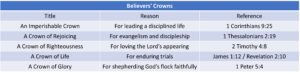
In Ezekiel 9:1-8, we are told the righteous would be kept from the hand of the destroyer, but the ‘keeping’ didn’t mean they would be saved from physical suffering or death. In Ezekiel 21:3-4, we read of the same judgment as taking away the righteous as well as the wicked.
The point is they were preserved all the way through it, and so they came ‘out of’ it. In other words, Jesus keeps them from the hour, Revelation 3:10, keeping them from what the hour could produce.
So, what could that hour of trial produce? Apostasy, falling away. In other words, Jesus would safely see them through their time of trouble, Revelation 1:1 / Revelation 1:11 / Revelation 1:16, but the Jews had no such promise.
Philadelphia was known as ‘Little Athens’ for it was full of idols and idol temples. It would not have been the first time that the worshipers of the idols had felt the ground shake and the pillars crack and tumble due to the earthquakes. At such a time, there would be only one thing to do, and that is to run.
But God’s temple cannot crumble, whatever happens in the physical realm. The pillars in that temple are mature Christians, solid, stable, and immovable, Revelation 3:12 / Galatians 2:9.
Barnes, in his commentary, says the following.
‘It is not uncommon in the New Testament to represent the church as a temple, and Christians as parts of it, 1 Corinthians 3:16-17 / 1 Corinthians 6:19 / 2 Corinthians 6:16 / 1 Peter 2:5.’
Christians like James, Peter and John, Christians who stand firm are the overcomers. When Jesus says, “Never again will they leave it,” Revelation 3:12, he’s saying that the saints will never have occasion to run because of fear.
We don’t know whether the church in Philadelphia was made up of Jewish Christians or Gentile Christians or both, but there is a lot of Jewish symbolism in these last few verses. In Isaiah 56:3-8, we find an amazing piece of Scripture.
If the church is Gentile, we have Isaiah speaking of the foreigners who have said, in Isaiah 56:3, “The LORD will surely exclude me from his people.” Also, in Isaiah 56:3, there is a reference to the eunuchs, who were a despised group, and they have the same reservations, believing they will not be acceptable to God.
But in Isaiah 56:5, we are told the foreigners and eunuchs are not to worry, for “to them I will give within my temple and its walls a memorial and a name better than sons and daughters; I will give them an everlasting name that will endure forever.”
In Isaiah 56:7, he says, “These I will bring to my holy mountain and give them joy in my house of prayer, for my house will be called a house of prayer for all nations”.
In other words, if the congregation is Gentile or predominantly so, we have the Scriptural assurance for them. If the congregation is Jewish or predominantly so, we have comfort for them. So, whoever they are, the scorned, the weak, they all have the Son of David behind them.
This is an open door for both Jew and Gentile. The door is open for both the Jews and Gentiles to receive the eternal blessings and promises from God, John 10:16. And it’s to the Christian who doesn’t fall away when persecution comes that Jesus says, “I will also write the name of my God and the name of the city of my God, the new Jerusalem,” Revelation 3:12.
Notice Jesus says, ‘my God’, Revelation 3:12 / Revelation 3:2 / Revelation 1:6. We must remember that Jesus is God, but the reference here alludes to Jesus’ humanity.
The Father became Jesus’ God when Jesus was in Mary’s womb, Psalm 22:10, and since Jesus was human, we know that God is the God of all flesh, Jeremiah 32:27. Hence, when He speaks to Mary, he tells her to go and tell His disciples, ‘I am ascending to My Father and your Father, and My God and your God,’ John 20:17.
Remember also that Jesus ascended back to the Father in His new glorious body, which was also physical, Mark 16:19 / Luke 24:50-52 / Acts 1:9-11. In other words, in heaven Jesus still has His humanity; hence why He calls the Father ‘my God’, Revelation 3:12.
Remember, the Jerusalem of Judea had long since ceased to be the ‘city of God.’ And it was there that they plainly examined and cruelly rejected their God. But there’s another Zion, and this Zion had as its foundation, and His name is Jesus the Christ, Isaiah 28:16.
This was the ‘new’ Jerusalem, Revelation 3:12, the ‘stones’ of which were members of the ‘new’ covenant, Jeremiah 31:31-34. Notice where this new Jerusalem comes from: it comes ‘down out of heaven’, Revelation 3:12, and that’s very significant. This tells us of its divine origin; this is a city made without hands, whose builder and maker is God.
While the beast-like kingdoms of Daniel 7 rise out of the water or the earth, the Messianic kingdom is set forth in the Son of Man who rides in the heavens. What a wonderful picture that is, isn’t it?
But Jesus isn’t finished yet; the ‘new’ name of Jesus would be written on them, Revelation 3:12 / Revelation 2:17. Remember, this is referring to endorsement, being identified with, Matthew 10:32. In other words, Jesus would own the overcomer as His own.
But what is this new name? It is ‘Jesus, the Lord.’ Paul says this will have to be confessed, one way or another, Philippians 2:9-11. And the day is coming when everyone, born or dead, every demon in hell, is going to have to confess that Jesus is Lord.
And so, Jesus says to all Christians, whether you’re alive or dying, whether you’re in peace or at war, whether you are rich or in poverty. If you remain faithful to Him, you will be unashamedly owned by Jesus.
Are we listening? Revelation 3:13. May we always listen and pay close attention to what the Spirit is teaching us today. May we always keep our eyes open for those precious doors which God opens for us to share the Gospel with others. May we never give up or think about falling away when hard times come.
May we never forget the place and authority of Jesus. And may we never give God the opportunity to disown us because we have disowned Him, Matthew 10:33 / 2 Timothy 2:12.
Remember, when He finishes with those same words to all the seven churches, Revelation 3:13, He is actually teaching the same lesson to all the churches so that they, too, will pay close attention to what He says.
Out of all the churches written to in Revelation 2-3, I think it’s sad that the church in Laodicea has been the most studied and preached. The church that made famous the shocking saying of Jesus, ‘I will spew you out of my mouth!’ Revelation 3:16.
The town itself lay around forty-three miles southeast of Philadelphia, and the Laodiceans were a rich community. They were famous for glossy black woollen garments and for their famous eye powder. This powder was exported all over the world in tablet form.
It was then ground into powder and used to relieve eye complaints. Phrygia was one of the areas in Asia Minor where eye diseases were rampant.
The city is located in the Lycus River Valley together with Hierapolis and Colossae. This valley is a natural route of travel from east to west. The city was founded by the Seleucid king Antiochus II and named for his wife Laodice about 260 BC.
It has a famous aqueduct, and the water that was piped to Laodicea was rich in calcium, which over time would cause the pipes to clog. The engineers designed the aqueduct with vents covered with stones that could be removed periodically for cleaning.
There were also many stadiums, one of which is still preserved today. The one at Laodicea was built by Nicostratus and dedicated to Vespasian in AD 79, according to an inscription found in it.
The stadium is circular at both ends, and the total complex was nine hundred feet long. Used primarily for running races, the length of the track was fixed at six hundred feet. This church was planted and received the Gospel not from the apostle Paul but from his helper Epaphras during the time Paul was in Ephesus, Colossians 4:12-13.
Jesus begins by describing Himself as the ‘Amen’, Revelation 3:14. Usually, when we think of the word ‘Amen’, we automatically think it means ‘so be it,’ but here it doesn’t mean that.
In describing Himself as the ‘Amen’, Jesus is saying that He is the firm One, the definite One, Isaiah 65:16. In other words, Jesus is the One who is steady and unchangeable in all His purposes and promises.
He also says, ‘He is the faithful and true witness,’ Revelation 3:14 / Revelation 1:5 / Jeremiah 42:4-6. As we go through this letter, you will soon see that there was nothing distinctive about the Laodiceans. They had no ‘witness’, and they were not ‘faithful’ to the testimony they had concerning Jesus.
They really stood for nothing; they weren’t concerned with heresy, and they weren’t concerned about being heretics. After all, to become a heretic takes energy, and they didn’t have any energy.
Jesus says, ‘He is the faithful and true witness,’ Revelation 3:14, whose testimony of God and to men ought to be received and fully believed. But Jesus also has another testimony, and that is the testimony of men to God, and that too will be fully believed because Jesus is the true witness, Revelation 3:14.
Notice what else Jesus describes Himself as; He says He is “the ruler of God’s creation,” Revelation 3:14. Now the KJV uses the words ‘The beginning of the creation of God’, which can be very misleading.
The word ‘beginning’ here doesn’t mean that Jesus was the first thing created, as some people like to believe. It means Jesus is the ‘cause’ or ‘source’ of the creation of God, John 1:1-3 / Acts 3:15 / Colossians 1:15 / Colossians 1:18 / Hebrews 1:1-2.
Jesus is reminding the rich, self-reliant church in Laodicea where all the blessings come from. Every human being is blessed by God, Matthew 5:45. The main problem in the church in Laodicea was that it was their church, not the Lord’s. Jesus immediately identifies their problem, and it was a problem of possession.
It was their church, and they did as they pleased, and they never considered the will of the Lord. Jesus says He is the steady, unchangeable One; He is the One who is faithful and is the true witness. He is the One who is the source of all blessings, Revelation 3:14, and it’s His church, Ephesians 1:22-23, not ours.
Once again, we’re reminded that Jesus sees and knows everything that every Christian is doing or not doing, and He sees the congregation as a whole, Revelation 3:15 / Revelation 2:2. He says that you Christians in Laodicea are ‘neither cold nor hot but lukewarm,’ Revelation 3:15.
They were lukewarm, which doesn’t mean they were going from cold to hot, but they were actually going from hot to cold. The hot springs of Laodicea were not really hot but comfortably warm, so it was good for having a bath in, but horrible to drink.
But let me ask you, did Jesus want them to become cold? Would He really rather have had them cold than lukewarm? Well, that’s what He said, Revelation 3:15, and maybe He said it that way simply to stress the horror of their position.
And what was the horror of their position? They were neither hot nor cold, Revelation 3:16. In their present state, they couldn’t claim they hadn’t known; they couldn’t claim that they had never been moved.
In that way, it would have been better for them never to have been moved than to have been moved to become moderate, 2 Peter 2:21. To these lukewarm Christians, Jesus says, you are neither cold nor hot but lukewarm, and because of that, I’m going to reject you; I’m about to spit you out of my mouth, Revelation 3:16.
In other words, here is a church which had lost its passion for the things of the Lord. They had become indifferent and apathetic. They had reached a place where they were going through the motions, but they were unmoved by the things of the Lord.
They didn’t care too much about the cross of Jesus; they weren’t really interested in what the Word of God meant. They didn’t really care about the condition of the lost people around them. These Christians were not burning hot with passion for Jesus, nor were they totally dead and cold; they were somewhere in between.
Someone once said the following.
‘Let your words be few and sweet. It’s better this way when you come to eating them.’
God always hears what we say, and He has this tremendous memory. The trouble with us is, we have such large mouths and so little worth saying. Without Jesus, we can do nothing, John 15:5.
The church in Laodicea is guilty of the ‘atheism of the pound’. Now, what do I mean by that? I mean, in come the pounds and out goes God. This is a church that thought it could buy its way to congregational success, Revelation 3:17 / Psalm 50:12. The Laodiceans say, ‘they are rich’ and ‘we need nothing,’ Revelation 3:17. Jesus tells them they are ‘wretched, pitiful, poor, blind and naked,’ Revelation 3:17.
Barnes, in his commentary, says the following.
‘Salvation is often represented as a garment, Matthew 22:11-12 / Revelation 6:11 / Revelation 7:9 / Revelation 7:13-14, and the declaration here is equivalent to saying that they had no religion. They had nothing to cover the nakedness of the soul, and with respect to the real needs of their nature, they were like one who had no clothing in reference to cold, and heat, and storms, and to the shame of nakedness.’
Can you imagine how you would have felt if Jesus had written these words to you? The truth is that we all hate to see ourselves for who we really are. Jesus says to this church, ‘You are not rich; you are totally poor.’ He says, ‘You are not blessed; you are wretched,’ which means afflicted. ‘Pitiful is what you are,’ Jesus says.
All their wonderful medicine, for which they were famous, to help eye complaints, can’t help them; they are blind, Revelation 3:17. Their beautiful, black, shiny garments, which covered the bodies of so many, even in foreign lands, can’t hide their own embarrassing nakedness, Revelation 3:17. These are strong words, and we need to remember that how we see ourselves may not be how God sees us.
The town of Laodicea had a banking centre, but sadly, its vaults didn’t hold the gold of God. Their gold, Revelation 3:18, was the type of perishable gold which Peter describes in 1 Peter 1:18. And yes, their black garments covered the body, but as we know, God’s white garments covered the soul, Revelation 3:18 / Revelation 3:17 / Revelation 3:4.
And so, Jesus sees and looks at the heart, 1 Samuel 16:7, and He tells them that their famous eye medicine can’t deal with real eyes, the eyes where you can see the real you, Revelation 3:18 / 1 Corinthians 13:12 / James 1:23-25.
We know that discipline is needed spiritually as much as it is needed physically, Hebrews 12:4-13. We know that God wants to mould us and help us to look more and more like His Son, Jesus, Romans 8:29 / 2 Corinthians 3:18 / Ephesians 4:11-15.
But we need to understand that discipline is not something God does to us, but discipline is something which God does for us, Revelation 3:19. If God did that for Jesus and for our benefit, Proverbs 3:12 / Hebrews 5:7-8, don’t we want God to have His way with us to help us grow in obedience to Him?
Our problem is that we want to get out of the trial too early; we want it over and done with. But God is working in us, and because He loves us, He is trying to produce perseverance in our lives; He is trying to help us become mature, where we lack nothing, James 1:2-4.
And when discipline comes our way, it may be because we’re heading off in the wrong direction, and we may need to think seriously about it and turn towards God again, Revelation 3:19.
If you’ve already been immersed into Jesus Christ for the forgiveness of your sins but you’re slowly drifting away, why don’t you come home again? This passage of Scripture was written with people like you in mind, Revelation 3:20. Why don’t you let Jesus back in?
Now, there are some who teach what they call the ‘sinner’s prayer’, and the Scripture they use to support this idea is this very verse. There is a great variation when it comes to the ‘sinner’s prayer’, but most say something like this: ‘Jesus, I now realise I have sinned against you. Please forgive me for my sin. Please come into my life and change my heart. I want you to be my Saviour. In Jesus’ name I pray. Amen.’
Let me ask you: Who is Jesus speaking to in Revelation 3:20? He’s not speaking to non-Christians, but He’s speaking to people who have already become Christians. There’s not one teaching anywhere in the Bible about saying a prayer to become a Christian.
Jesus, in an effort to get back into His church, is standing, knocking at the door, Revelation 3:20. And He says, ‘If anyone hears my voice and opens the door, I will come in and eat with that person, and they with me,’ Revelation 3:20 / Isaiah 55:1 / John 7:37 / Revelation 22:17.
Barnes, in his commentary, says the following concerning coming in and eating together, Revelation 3:20.
‘This is an image denoting intimacy and friendship. Supper, with the ancients, was the principal social meal; and the idea here is that between the Saviour and those who would receive him there would be the intimacy which subsists between those who sit down to a friendly meal together. In all countries and times, to eat together, to break bread together, has been the symbol of friendship, and this the Saviour promises here.’
Dummelow, in his commentary, says the following.
‘The blessings which Christ gives, both here and hereafter, are often spoken of under the figure of a feast, Revelation 19:9 / Matthew 25:1 / Luke 22:29.’
Do you see how our relationship with Jesus is so personal? Fellowship together, eating with one another. Jesus will knock, and He will wait, but He will not break down the door. It must be opened by you, and that’s because Jesus won’t enter anyone where He is not invited.
Notice that although Jesus is speaking to the whole church, He actually addresses them individually; He doesn’t say, ‘if everyone,’ but ‘if anyone,’ Revelation 3:20. Now, why is that important?
Well, simply because, as a church, we can drift away, but it only takes one Christian to invite Jesus back into their life again to get the church moving in the right direction again.
Isn’t God a gracious God? Isn’t God a patient God? He’s about to spit them out of His mouth, Revelation 3:16, because of their lukewarm attitude and their self-sufficiency, but! But He says, if they repent and change their attitude towards their Lord Jesus, Revelation 3:19, then He will bless them richly.
This church seemed to be absolutely overrun and overcome with lukewarmness and self-confidence. And yet it was possible, by the rebukes and warnings of Christ, that they might be inspired with fresh zeal and vigour and might come off conquerors in their spiritual warfare, Isaiah 54:17 / 2 Corinthians 10:3-5 / Ephesians 6:11-13 / James 4:7 / 1 Peter 5:8-9.
Think about it: God is a God who wants to forgive. And if they repent, then all their former faults will be forgiven, and they will have a great reward. And what is that reward? ‘They shall sit down with me on my throne, as I also overcame, and have sat down with my Father on his throne,’ Revelation 3:21 / Revelation 2:26-27 / Romans 8:17.
We know that Christ Himself had met with His own temptations and conflicts, Matthew 4:1-11. And we know that He overcame them all and was more than a conqueror. And we also know that Christ’s reward was to be seated in glory with the Father on His throne, Revelation 3:21.
Barnes, in his commentary, says the following.
‘All things are put under his feet, and in the strictest unison and with perfect harmony he is united with the Father in administering the affairs of all worlds. The dominion of the Father is that of the Son, that of the Son is that of the Father; for they are one, John 5:19 / Ephesians 1:20-22 / 1 Corinthians 15:24-28.’
Jesus is saying that those who are conformed to Christ in His trials and victories shall be conformed to Him in His glory. And He says they shall sit down with him on His throne, on His throne of judgment, on His throne of glory to all eternity, Revelation 3:21.
Clarke, in his commentary, says the following concerning sitting on the throne, Revelation 3:21.
‘Here is a most remarkable expression: Jesus has conquered, and is set down with the FATHER upon the Father’s throne; he who conquers through Christ sits down with Christ upon his throne: but Christ’s throne and the throne of the Father is the same; and it is on this same throne that those who are faithful unto death are finally to sit! How astonishing is this state of exaltation! The dignity and grandeur of it who can conceive?’
Isn’t that worth changing your attitude for? Isn’t it comforting to know that God really does want to reward us for our faithfulness?
Are we listening? Revelation 3:22. Have we listened to what the Holy Spirit has been saying to us through all of these letters? All seven letters have closed with a demand for our attention, Revelation 2:7 / Revelation 2:11 / Revelation 2:17 / Revelation 2:29 / Revelation 3:6 / Revelation 3:13 / Revelation 3:22. They are written for all the churches, in all ages and in all parts of the world, 1 Peter 4:17.
May we strive to always do what is right in the eyes of the Lord, and may we also be ready and willing to repent as individuals or as a congregation. The rewards for faithfulness are just too great to lose out on.
In a general sense, the problems that existed in the seven churches of Asia are the same kind of problems experienced by congregations today. We would do well to carefully study these seven churches and learn from their mistakes. These churches were in a state of crisis; some were strong, and some were about to be overcome. They needed encouragement.
Revelation is a symbolic presentation of the church in conflict with Jewish, pagan, and Roman persecuting powers. It promises victory if they overcome; it’s up to them to diligently fight the battle.
If they put forth the effort to overcome Satan and his angels, then Christ will help them in their battles. During times of persecution, we must not forget that Jesus is still the Head of the church, Colossians 1:18 / Ephesians 1:22-23 / Ephesians 5:23, and that we are responsible as members of that church for how we live our lives.
We must look at ourselves and examine ourselves to see if we are living in the faith, 2 Corinthians 13:5, especially in times of persecution. But at all times we must make sure that we’re right with God and that we’re living as we ought to live, realising that if we live faithfully, then we can overcome and live with God.